
Researchers from the Light Alloy and Rare-Dispersed Elements Separation Group at the Qinghai Institute of Salt Lakes (ISL), Chinese Academy of Sciences, have achieved important progress in the efficient treatment of high-salinity organic wastewater. Their findings were published in Chemical Engineering Journal under the title “Tailoring reactive oxidative species (ROSs) cascades in a tandem non-thermal plasma/defect-engineered TiO2 system for enhanced degradation of flotation reagent-laden brine: Unlocking synergistic ROSs generation and pathways.” ISL is the first affiliated institution of the paper. Associate Professor Siyuan Zhang is the first author, and Professors Haining Liu and Xiushen Ye are the corresponding authors.
High-salinity industrial wastewater typically contains refractory organic contaminants, while elevated salt concentrations significantly suppress the reactivity and utilization efficiency of reactive oxygen species (ROSs), thereby limiting the performance of conventional advanced oxidation processes. As a result, the effective treatment of saline organic wastewater remains a longstanding challenge in environmental engineering. Focusing on the difficult removal of two typical flotation reagents-octadecylamine (ODA) and dodecyl morpholine (DMP)-from potash flotation tail brines, the ISL team constructed a tandem system integrating non-thermal plasma with photocatalysis. Using a plasma-induced defect-engineering strategy, they further developed a TiO2 photocatalyst (TiO2-P) enriched with surface oxygen vacancies and Ti3+ active sites, enabling rapid and efficient degradation of organic pollutants in real high-salinity tailing brines.
The results showed that TiO2-P exhibited markedly enhanced photoelectrochemical properties compared with pristine TiO2. X-ray photoelectron spectroscopy (XPS) and electron paramagnetic resonance (EPR) analyses confirmed the formation of abundant surface oxygen vacancies and Ti3+ defect sites. Mott–Schottky and photocurrent measurements further revealed that defect engineering increased the carrier concentration to 4.28×1018 cm-3, representing a 7.1-fold increase relative to pristine TiO2, while the photocurrent response was enhanced by 4.3 times. These changes effectively suppressed electron-hole recombination and accelerated interfacial charge transport.
Building on this catalyst design, the researchers incorporated TiO2-P into a non-thermal plasma system and realized cascade regulation of ROS generation. The tandem system was found to promote the synergistic production and transfer of multiple ROSs, including hydroxyl radicals (·OH), superoxide radicals ( ) and singlet oxygen (1O2), thus significantly strengthening pollutant oxidation under high-salinity conditions. This approach overcomes a key limitation of traditional advanced oxidation technologies, which are often severely constrained by radical quenching in saline media.
Performance evaluation demonstrated excellent removal of ODA and DMP in both simulated and real potash flotation brines. In particular, in real potash flotation tail brine, the target pollutants were completely degraded within 15 minutes, while total organic carbon (TOC) removal reached 55%–62%, indicating strong mineralization capability and good tolerance toward complex wastewater matrices.
In addition to performance validation, the study systematically elucidated the synergistic mechanism underlying the tandem process. The results indicate that non-thermal plasma not only supplies abundant primary reactive species and localized energy input, but also couples effectively with the defect-engineered TiO2 surface to facilitate electron transfer and ROS cascade reactions. This synergistic interaction drives the conversion of ODA and DMP from long-chain, strongly hydrophobic, and recalcitrant molecules into smaller and less harmful intermediates, thereby further improving detoxification and mineralization performance.
This work provides a new technical route for controlling organic reagent pollution in high-salinity flotation tail brines, while also offering theoretical guidance and design insights for the treatment of complex industrial brines and the development of next-generation advanced oxidation technologies. The study not only demonstrates the practical potential of non-thermal plasma–photocatalysis coupled systems for real high-salinity industrial wastewater treatment, but also clarifies the deep coupling relationship between plasma discharge kinetics and catalyst surface defect structures, providing important support for the green and efficient remediation of saline wastewater.
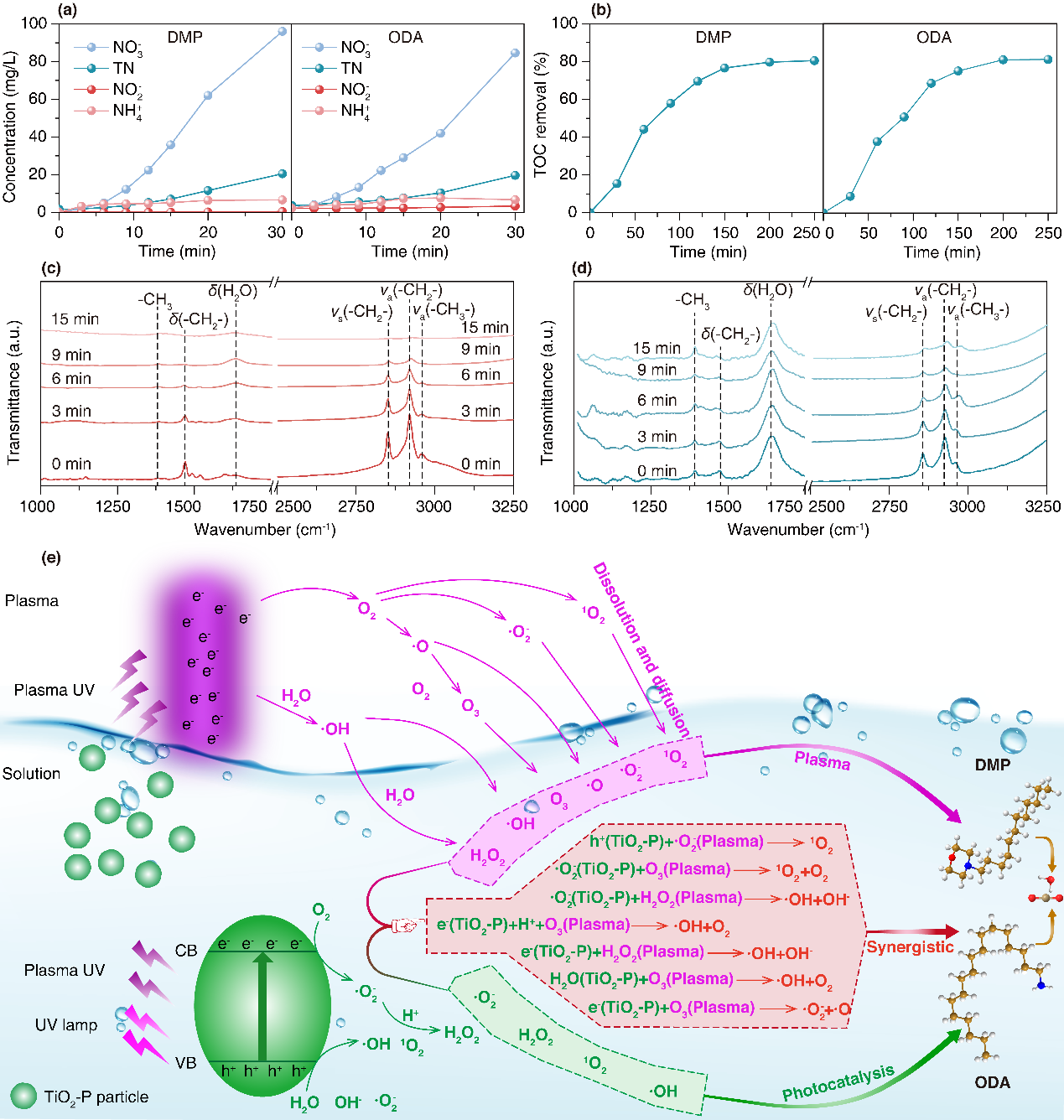
Figure 1 The synergistically enhanced mechanism of plasma-coupled photocatalytic degradation
This research was supported by the National Natural Science Foundation of China (U24A20551, 12505291), the Qinghai Provincial Science and Technology Program (International Cooperation Special Project, 2025-HZ-803), and the Qinghai Kunlun Talent Program.
Paper link:https://doi.org/10.1016/j.cej.2026.173053